
Traveling for a Show: How to Protect Your Physique During Transit
Traveling for a bodybuilding competition is not just logistics — it’s physiology under stress.
Long hours of sitting, disrupted meals, altered hydration, poor sleep, and elevated stress hormones can completely change how an athlete looks on stage — even if body fat hasn’t changed at all.
Understanding what happens inside the body during travel is what separates amateurs from prepared athletes.
⸻
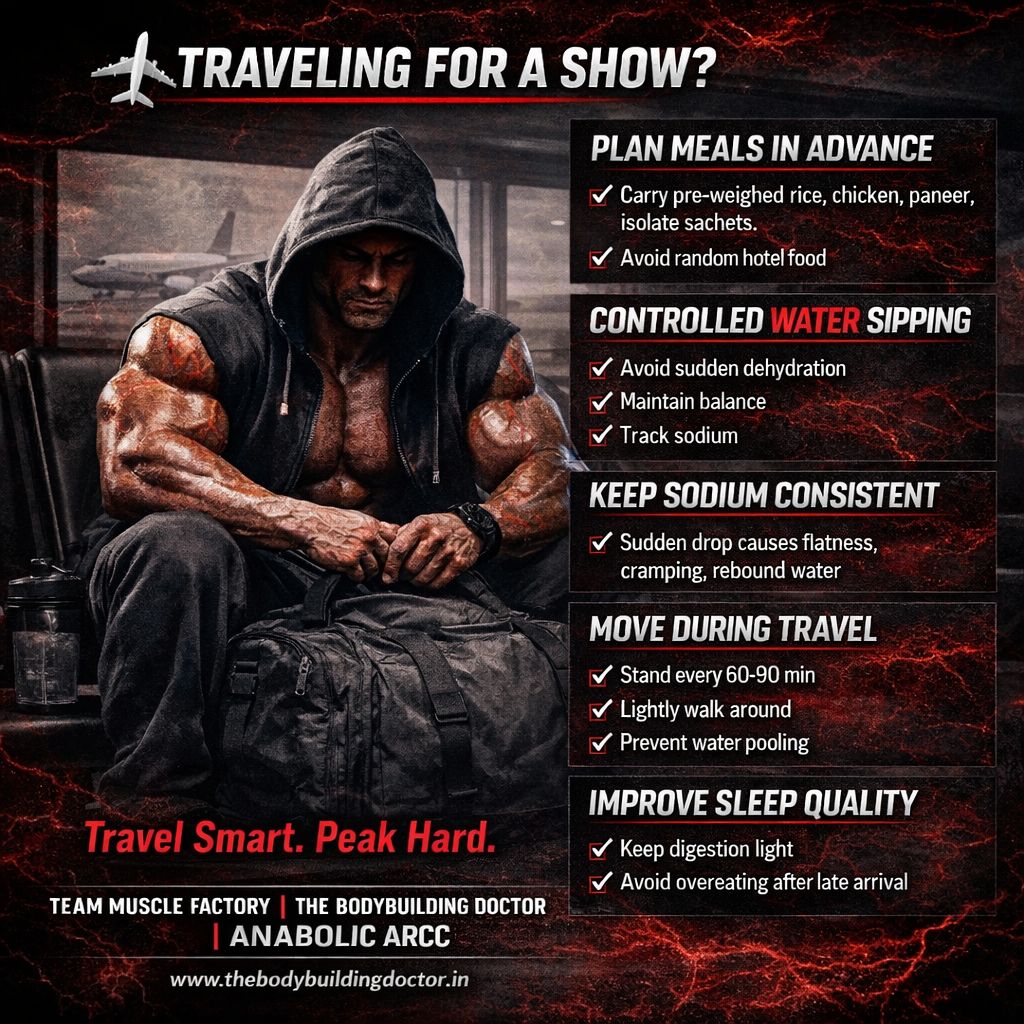
🧂 1. Sodium Must Stay Consistent
One of the biggest mistakes athletes make while traveling is randomly cutting sodium.
Here’s what happens physiologically:
• Sudden sodium drop → Aldosterone increases
• Aldosterone increase → Water retention
• Result → Puffy, watery appearance
Consistency is more important than drastic manipulation.
Travel is not the time to experiment.
⸻
💧 2. Controlled Water Sipping (Not Dehydration)
Flights and long road trips dehydrate you faster than you realize.
Cabin pressure + AC + sitting = increased fluid shifts.
What athletes do wrong:
• Stop drinking water completely
• Or overdrink randomly
Correct approach:
• Controlled sipping
• Maintain electrolyte balance
• Avoid sudden water cuts mid-travel
Dehydration spikes ADH (antidiuretic hormone), which can cause rebound water retention.
⸻
🍱 3. Plan Meals in Advance
Travel days are not flexible diet days.
Athletes should carry:
• Pre-weighed rice / potatoes
• Chicken or paneer
• Whey isolate sachets
• Measured sodium
Hotel food = unknown sodium + unknown fats.
Even small dietary deviations can alter fullness and digestion before stage day.
⸻
🚶 4. Movement Prevents Water Pooling
Sitting for long hours causes:
• Lower body blood pooling
• Reduced circulation
• Increased fluid accumulation
Athletes should:
• Stand every 60–90 minutes
• Walk lightly when possible
• Do ankle rotations and calf contractions
Small movements help maintain vascular flow and reduce puffiness.
⸻
🧠 5. Cortisol Management Is Critical
Travel is stress.
Stress elevates cortisol.
High cortisol:
• Increases water retention
• Impacts glucose balance
• Affects muscle fullness
Athletes should:
• Avoid panic decisions
• Stick to their plan
• Prioritize breathing and relaxation
• Maintain routine consistency
Peak week is already a hormonal balancing act — travel adds another layer.
⸻
😴 6. Sleep Strategy Matters
Poor sleep before a show can:
• Increase water retention
• Reduce muscle fullness
• Affect mood and presentation
Upon late arrival:
• Keep last meal light
• Avoid high fiber
• Avoid binge eating
• Focus on digestion-friendly foods
⸻
🔬 What Most Athletes Don’t Understand
When you travel:
• ADH fluctuates
• Aldosterone rises
• Cortisol increases
• Circulation slows
• Electrolytes shift
The “soft” look after travel is rarely fat gain.
It is hormonal fluid shift.
Understanding this is what allows a coach to make intelligent adjustments — instead of emotional ones.
⸻
🎯 Final Takeaway
A well-prepared athlete does not just plan peak week.
They plan:
• The journey
• The sodium
• The hydration
• The meals
• The stress
Champions don’t leave their physique to chance.
They manage physiology.